





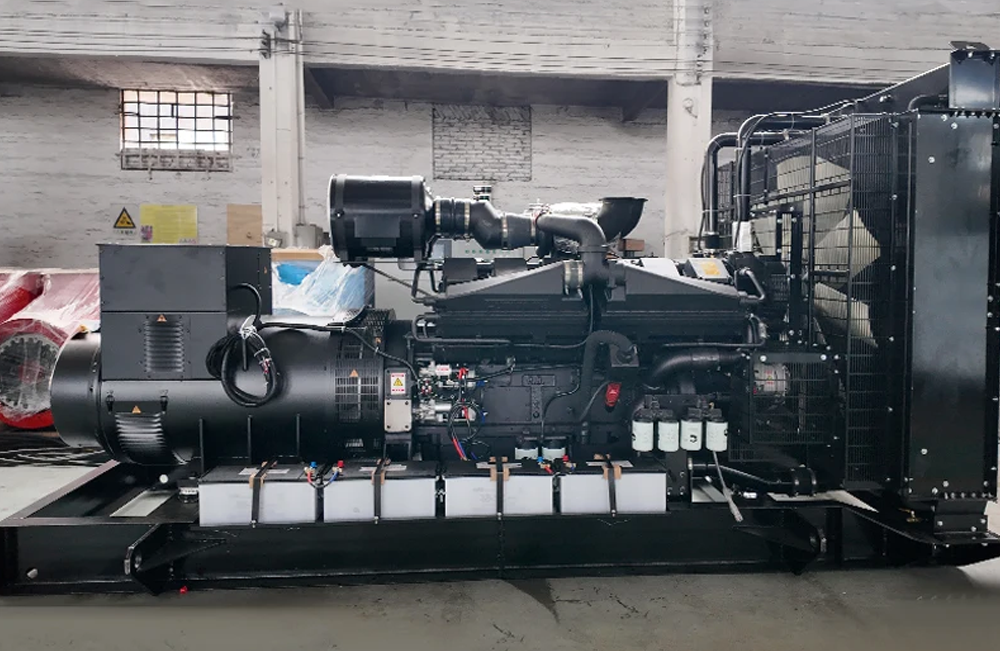
Proven Reliability in Critical Industrial Applications
Phenomenon: Persistent Demand for Cummins Generators in Critical Facilities
Critical infrastructure operators - including hospitals, data centers, and manufacturing plants - consistently choose diesel generator sets engineered for industrial resilience. A 2023 analysis of backup power systems revealed that facilities requiring >99.9% uptime are 2.3x more likely to select units meeting MIL-STD-810 military durability standards, a key differentiator in Cummins' design philosophy.
Principle: Engineering Standards Behind Reliability in Industrial Applications
The Cummins diesel generators are pretty tough in operation thanks to their backup cooling systems, those special mounts that absorb vibrations, and they meet ISO 8528-5 standards which keeps voltage regulated within ±0.5% even when loads change suddenly. What's really impressive is how long these machines last - over 40 years in harsh places such as steel manufacturing facilities and chemical processing plants. The Power Generation Research Consortium actually verified this durability back in 2024, showing why so many industrial operations rely on them for decades without major issues.
Strategy: Ensuring Operational Continuity with Proven Reliability
The best companies boost generator reliability when they combine Cummins equipment with smart maintenance strategies. These include checking oil condition after every 500 operating hours, running thermal scans to spot electrical issues early on, and doing load tests twice a year to make sure machines can start up quickly even in cold weather conditions. The whole system needs to kick in within about 90 seconds at most. According to some recent research from Frost & Sullivan released last year, businesses that follow this kind of forward thinking approach actually save around 31 percent over time compared to those who only fix problems as they happen. That makes a real difference in long term expenses for power generation systems.
Durable Engine Design for Harsh Operating Conditions
Cummins Diesel Generator Sets are built to perform in extreme conditions, leveraging forged-steel crankshafts, corrosion-resistant enclosures, and design tolerances validated for operation between -40°C and +55°C. This rugged construction exceeds standard engineering expectations, ensuring longevity even in remote or hostile environments.
Principle: Built to Last - Engineered for Continuous Operation
The core design minimizes mechanical stress through gear-driven cooling systems and modular components that simplify field repairs. Hardened piston rings and reinforced connecting rods resist wear under continuous 24/7 loads—essential for mining and offshore operations where downtime can cost up to $88,000 per hour (Industrial Energy Trends 2023).
Case Study: Performance of Cummins Generators in Offshore Oil Rigs
Over a 28-month North Sea deployment, Cummins units achieved 99.6% uptime despite constant salt spray and vibration. The sea-rated air filtration system blocked 93% of particulate ingress versus standard models, resulting in a 40% drop in maintenance frequency and fewer unplanned interventions.
Trend: Increasing Focus on Longevity and Reduced Downtime
Recent surveys show 78% of facility managers prioritize 10-year service life guarantees when selecting industrial generators. This demand aligns with advances in predictive analytics that monitor engine health trends, enabling scheduled maintenance during planned outages rather than emergency shutdowns.
By combining durable materials with adaptive thermal management, Cummins delivers measurable cost savings and sustained performance in the world’s most challenging settings.
Fuel Efficiency and Compliance with Environmental Standards
Principle: Balancing Fuel Efficiency and Emission Standards
Today's diesel generators need to balance efficient fuel consumption with increasingly tough emissions standards. The latest models feature precision fuel injection systems combined with smart load management that cuts down on wasted fuel by around 12 to 18 percent when compared to older versions according to data from the EPA back in 2016. For tackling nitrogen oxides specifically, manufacturers have turned to technologies such as selective catalytic reduction or SCR along with diesel particulate filters. These innovations manage to slash NOx emissions by nearly 95% while still maintaining good combustion performance. What this means for operators is cleaner air output without having to compromise on generator effectiveness or runtime between refuels.
Case Study: Reduction in Operating Costs Due to High Fuel Efficiency
Facilities using high-efficiency diesel generators saved $74,000-$110,000 annually, according to a 2023 manufacturing sector analysis. One automotive plant reported an 18-22% decline in diesel consumption over three years after upgrading, aligning with EPA Phase 2 greenhouse gas standards for heavy-duty engines.
Controversy Analysis: Emissions vs. Power Output in Diesel Technology
While critics argue that exhaust gas recirculation (EGR) can reduce power density by 8-12%, independent testing confirms tier-certified diesel generators maintain over 98% operational uptime in mission-critical applications. These units meet both Euro VI and U.S. Tier 4 Final standards, demonstrating that environmental compliance and industrial reliability are not mutually exclusive.
Smart Technology Integration: Remote Monitoring and Control Systems
Principle: Innovative Technology Enhancing Operational Oversight
IoT-enabled sensors and cloud-based analytics provide real-time monitoring of fuel levels, load balance, and engine temperature, allowing automatic adjustments for peak efficiency. According to a 2023 study by the Industrial Energy Institute, facilities using smart monitoring cut unplanned downtime by 37% compared to those relying on manual checks.
Case Study: Integration of Remote Monitoring in Data Centers Using Cummins Generators
A hyperscale data center operator deployed Cummins generators with integrated remote controls across six sites. During a 2024 regional blackout, the system activated backups in 8 seconds and transmitted encrypted diagnostics to engineers in real time. This IoT-driven response maintained 99.999% uptime, surpassing typical industry benchmarks.
Trend: Rise of IoT-Enabled Industrial Equipment
Adoption of connected equipment is accelerating: 68% of industrial operators now prioritize IoT integration for critical assets like generators, up from 42% in 2020. Platforms aggregating data from Cummins units enable predictive maintenance modeling and support broader Industry 4.0 initiatives.
Strategy: Leveraging Smart Controls for Predictive Maintenance
Smart systems analyze trends in oil degradation and coolant levels to schedule service 15-30% earlier than traditional inspection cycles. This proactive approach extends equipment life and ensures ongoing compliance through real-time combustion tuning.










Copyright © 2026 by Guangdong Minlong Electrical Equipment Co., Ltd. Privacy Policy